
Basic Puppy Training
The best time to start training is the day your puppy comes home. With short, consistent practice (and lots of encouragement), your puppy can grow into the well-mannered family dog everyone loves having around.
Start Early + Keep It Simple
Bringing home a new puppy is exciting… and yes, they’re adorable enough to get away with anything at first. But once the shoes get chewed, the jumping starts, or your puppy decides it’s a fun game to run away, you’ll be glad you started training early.
The good news? You don’t need long sessions to see big results. Start slow, stay consistent, and focus on building a strong bond.
- Tip: Most puppies learn best in 5-minute training sessions (a few times a day). Short + happy wins every time!
Training Style That Works Best
We believe the most effective training is built on positive reinforcement. Puppies learn best when they feel safe, encouraged, and rewarded for making good choices.
That said, it’s also important for your puppy to understand boundaries. A calm, firm “no” (and consistent follow-through) can go a long way—especially for puppies who are eager to please.
Remember: every puppy is different. Some need a gentle reminder, and others need clearer structure. Learning your puppy’s personality is part of the process.
These work best when they’re tiny + soft + quick to eat.
Small training treats (pea-sized)
Kibble (especially for easy commands)
Tiny pieces of cooked chicken or turkey (plain)
Freeze-dried treats (break into small bits)
Soft “puppy training” treats
- Tip: Use higher-value treats for harder skills (like “come”).
Some puppies LOVE this most:
“YES! Good puppy!” in a happy voice
Petting/chest scratches
Clapping + excited tone
Smiling + eye contact
(Praise works best when your tone is super upbeat.)
Perfect for doodles and retrievers!
Quick tug game (5–10 seconds)
Tossing a ball once
A squeaky toy moment
“Chase me!” mini game
Letting them carry a toy proudly
Good for crate training and settling:
Puppy-safe chew toy
Frozen Kong-style treat toy
Lick mat (supervised)
Keep Training Short + End on a Win
Training should feel like a game—not a punishment. Your puppy should leave each session feeling like they did something right.
A few quick rules we swear by:
-
Keep it short and upbeat
-
Reward the behavior you want to see again
-
Don’t train when you’re frustrated
-
End on a positive note (even if it’s a small win)
-
Finish with praise, cuddles, and encouragement

The First Few Weeks at Home
The first few weeks are all about teaching your puppy what “home life” looks like.
Helpful tips to start strong:
-
Supervise closely indoors (especially early on)
-
Use a leash inside if needed to prevent trouble
-
Create a simple routine: potty breaks, meals, naps, playtime
-
Keep your puppy away from unsafe areas and chewing temptations
Crate Training (Your Puppy’s Safe Space)
Crate training is one of the best things you can do for your puppy. When introduced properly, a crate becomes a safe, calm place where your puppy can rest, settle down, and feel secure.
Crates can also help with:
-
Potty training
-
Preventing chewing or accidents while unsupervised
-
Creating healthy independence
-
Reducing stress when left alone
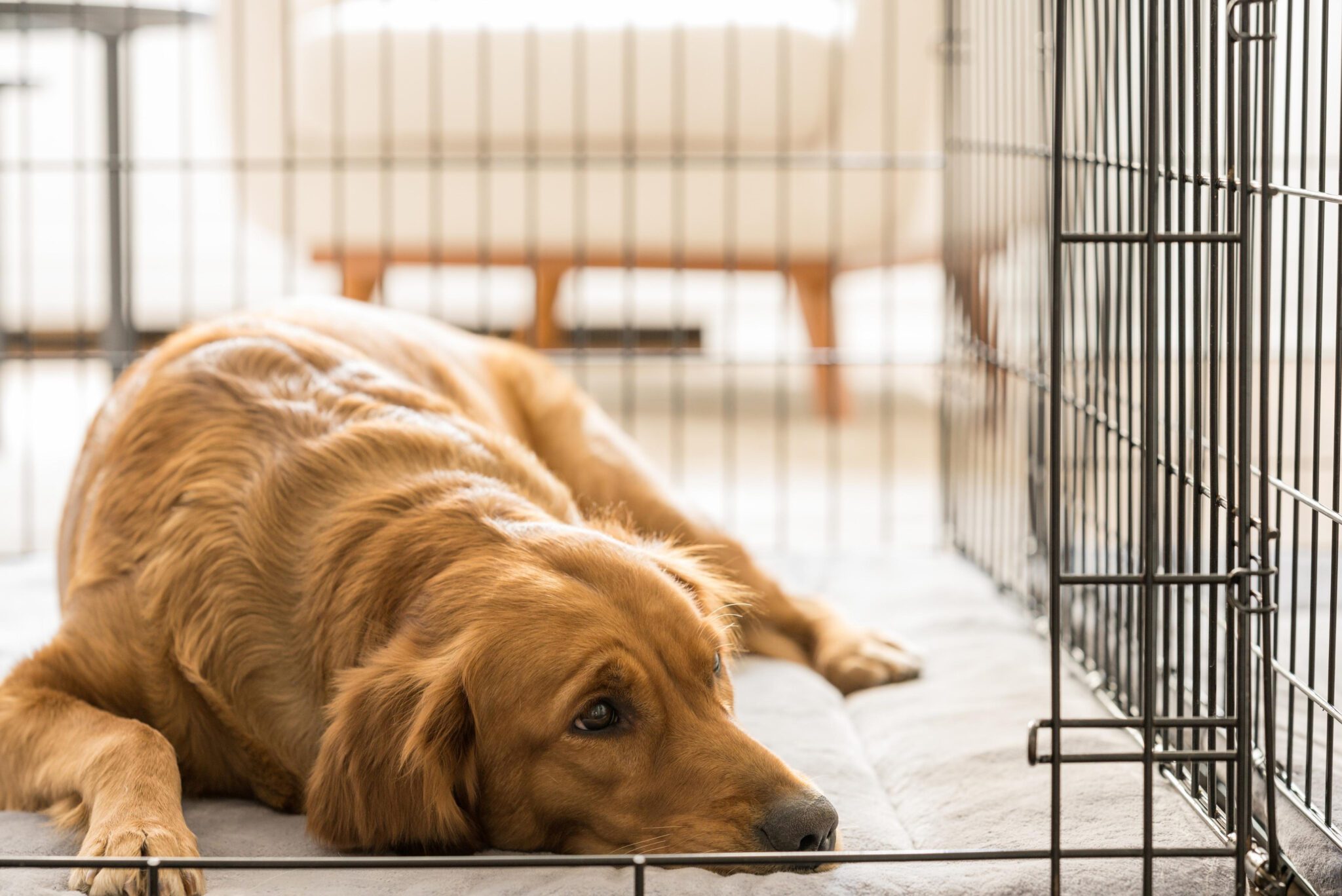
- Tip: If your puppy will be alone during the day, start crate training early—even if you’re just in the next room. This helps prevent separation anxiety and behavior issues later.
Consistency Matters (Get the Whole Family Involved)
Puppies repeat the behaviors that are reinforced—so consistency is everything.
Before you get too far into training, make sure everyone in the home agrees on:
-
What behaviors are allowed
-
What words/commands you’re using (“Off” vs “Down”)
-
How to reward good behavior
-
What to do when a behavior needs corrected
Basic Commands to Teach Your Puppy
You don’t need a long list of tricks—just a few solid commands that make life easier for everyone.
1. Loose-Leash Walking
Teach your puppy to walk without pulling. This is one of the biggest quality-of-life skills you can build early.
2. Sit
Perfect for greeting people, putting on the leash, waiting for food, and staying calm.
3. Stay
Helps your puppy hold a position (like “sit”) until you release them.
4. Down
A calmer position for longer stays—great for settling in the house.
5. Leave It
One of the most important safety commands. Teaches your puppy to ignore something and refocus on you.
6. Come
A must-have command for safety and everyday life. Practice often and reward heavily.
7. Go To Your Bed
A great way to teach your puppy to relax nearby when you have company or need a calm moment.
8. Wait
Perfect for doorways and boundaries (“don’t rush out the door”).
- Tip: Many families have good luck with local training programs, including places like Petco—just be sure you feel comfortable with the trainer’s style and methods.
House Training Your Puppy
House training takes patience, consistency, and a solid routine—but it doesn’t have to be stressful. These tried-and-true tips will help your puppy learn faster and help you feel more confident day by day.
3 Tried-and-True House Training Methods
Most families find success with one (or a combination) of these approaches:
-
Crate training
-
Frequent trips outdoors
-
Puppy pads / paper training
There are pros and cons to each, but they can all work with one simple foundation: consistency.
House Training Tips That Make the Biggest Difference
No matter which method you choose, these basics matter most:
-
Control the diet (predictable meals = predictable potty times)
-
Keep a consistent schedule for feeding, potty breaks, and playtime
-
Provide daily exercise (movement helps digestion and routine)
-
Use positive reinforcement every time your puppy goes in the right place
- Quick tip: Reward immediately after they finish pottying outside—so your puppy understands what they did right.
Crate Training (Highly Recommended)
If you’re new to crate training, it’s normal to feel unsure at first—but most puppy parents quickly realize it’s one of the best tools for house training and safety.
Crate training helps your puppy:
-
Learn structure and routine
-
Avoid accidents when unsupervised
-
Rest calmly (especially during busy moments)
-
Feel secure in a “den-like” space
Crate size matters:
Your puppy’s crate should be just big enough to stand up, turn around, and lie down comfortably. If the crate is too large, puppies may use one corner as a bathroom—which slows training down.
What to watch for:
If your puppy whines, scratches, or becomes restless in the crate, that often means: “I need to go potty.”
Try not to delay—responding quickly helps prevent accidents and builds the habit.
Puppy Pads & Paper Training
Puppy pads can work, but they can also be tricky—because they teach your puppy that sometimes pottying indoors is okay.
In an ideal situation, puppies learn to hold it indoors and go potty outside.
However, puppy pads may be helpful for:
-
Apartments or limited outdoor access
-
Extreme winter weather
-
Very small puppies who need more frequent breaks
If you use pads early, many families transition away from them later as routines become more consistent.
A Potty Schedule Is the Secret to Success
Puppies have tiny bladders, and they need lots of chances to “get it right.”
A helpful rule of thumb is:
A puppy can usually hold their bladder about the number of hours equal to their age in months.
(Example: a 4-month-old puppy can often hold it about 4 hours.)
That said—every puppy is different, and younger puppies will need much more frequent trips outside.
When to Take Your Puppy Outside
Plan to take your puppy out:
-
First thing in the morning
-
Last thing at night
-
After playing
-
After crate time
-
After naps
-
After eating
-
After drinking
Yes… it can feel like a lot at first. But the more consistent you are early on, the faster this phase passes.
One More Tip That Helps A LOT
When you go outside, give your puppy a moment to focus.
Many puppies “forget” to potty because they’re excited, playing, or exploring. Try standing calmly and ignoring them for a minute so they can remember: Oh yeah… I need to go.
Consider Puppy Training Classes
Professional training classes are a great option—especially for first-time puppy owners. They provide structure, hands-on guidance, and socialization.
We recommend starting puppy classes once your puppy has completed the appropriate vaccinations.
Your Puppy’s Future Starts with You
Your puppy can grow into:
-
the dog everyone raves about when they visit…
or -
the dog people hope is “put away” when they come over
It truly comes down to consistent, kind training and daily connection.
Even 15–20 minutes a day can make a huge difference—and you won’t regret it.
Have questions about training, routines, or what to expect when you bring your puppy home?
We’re always happy to help!