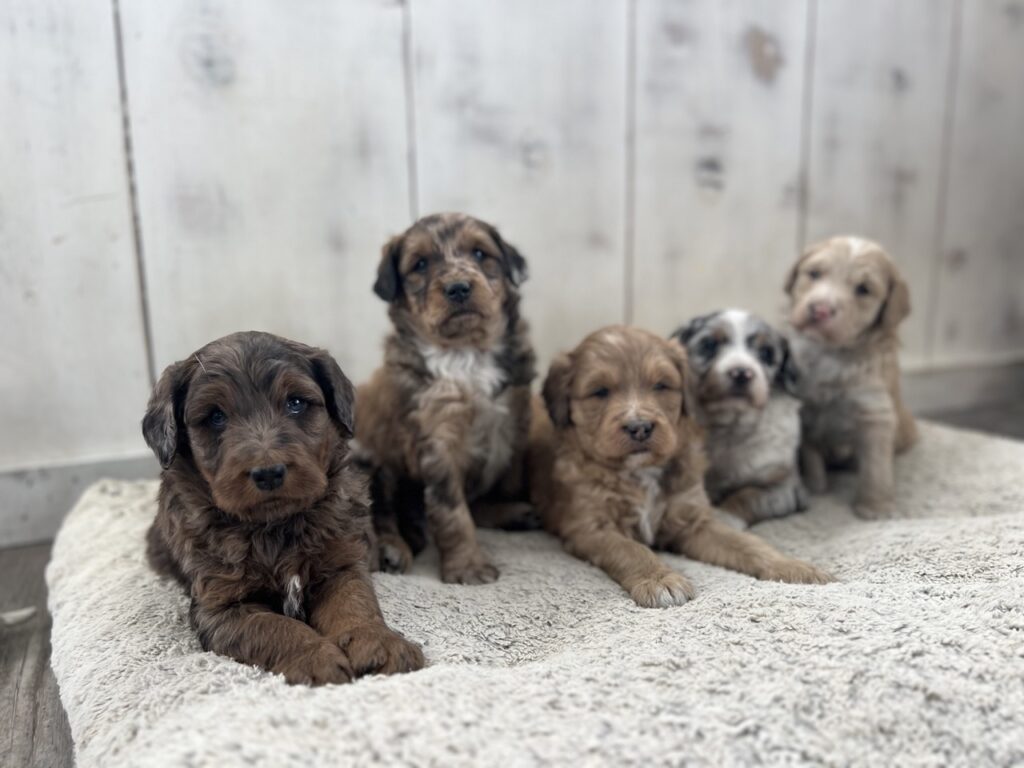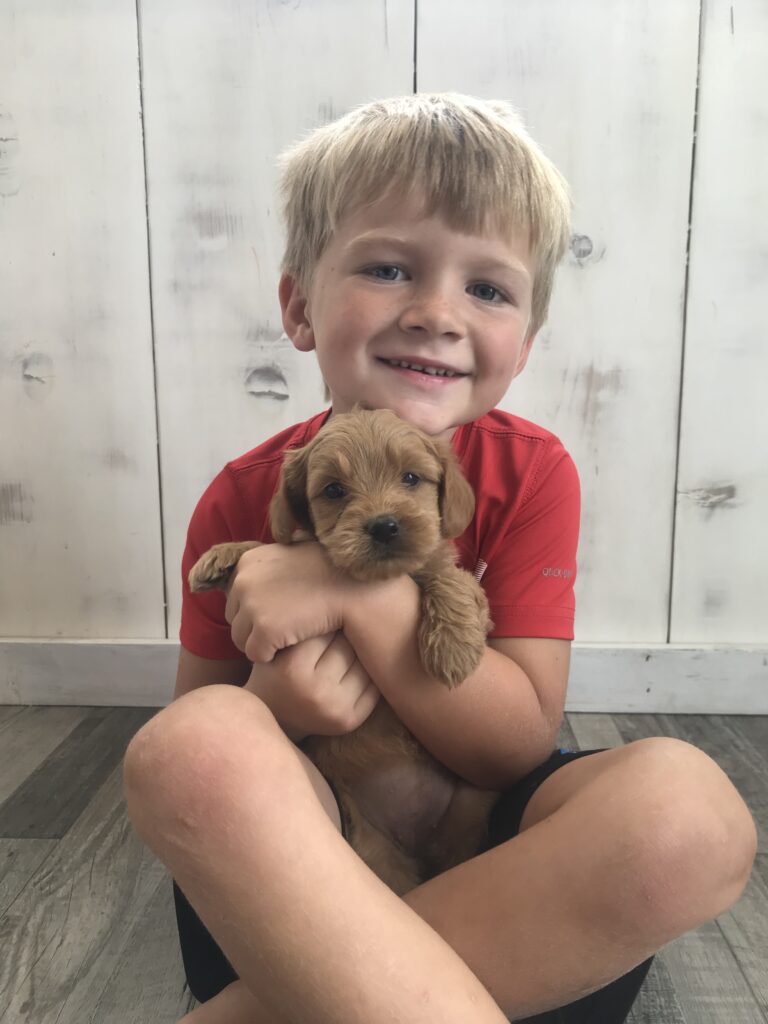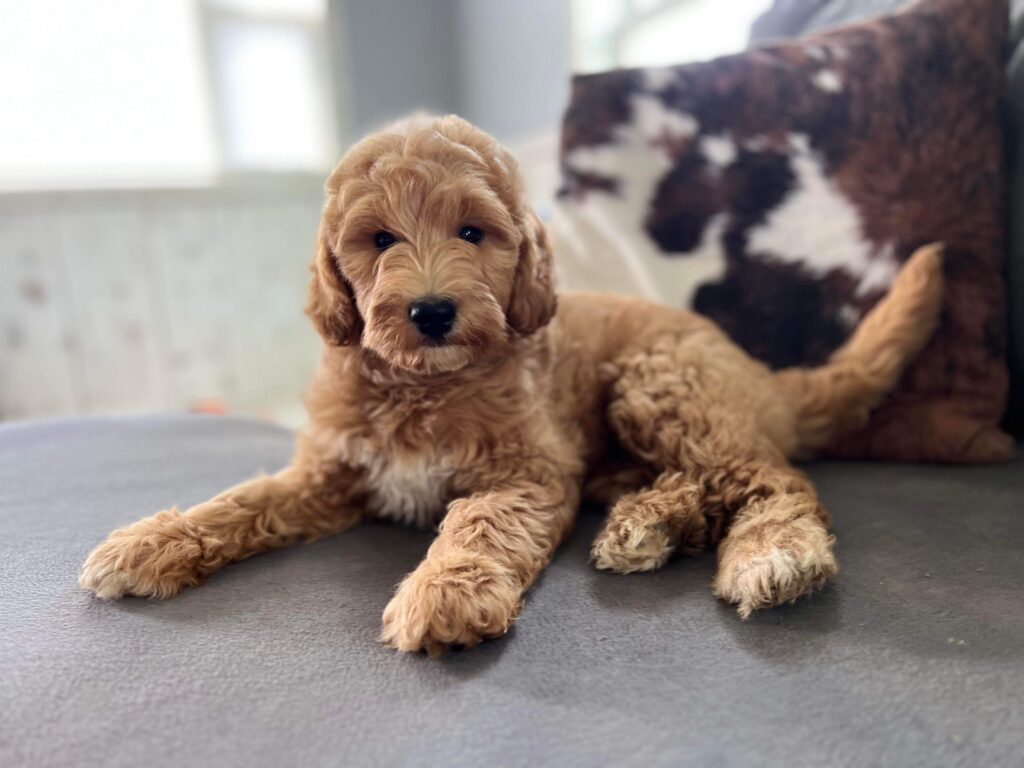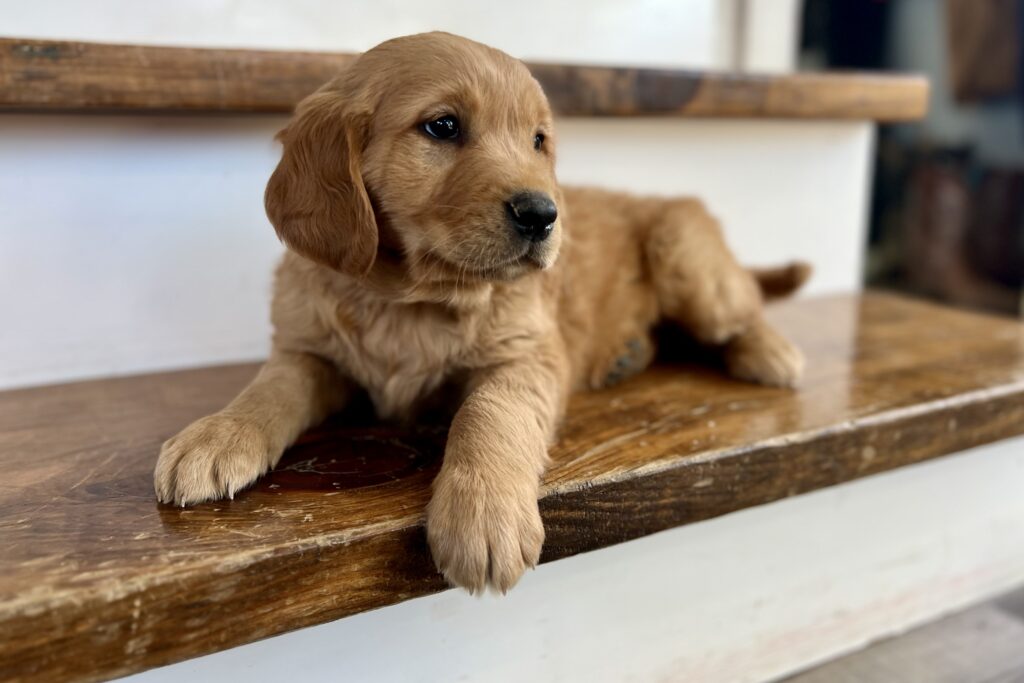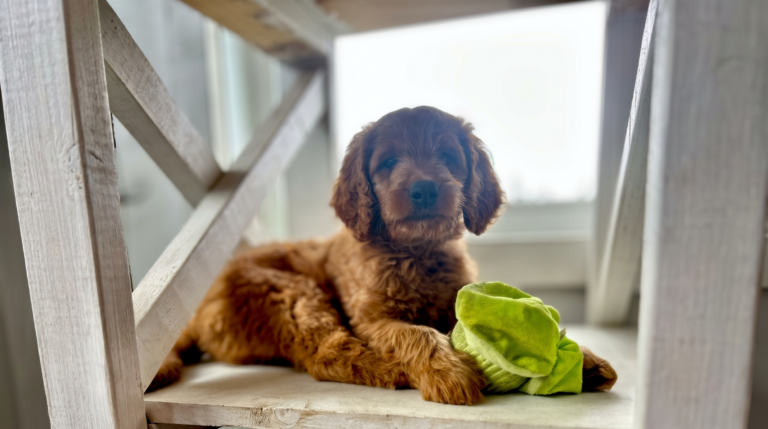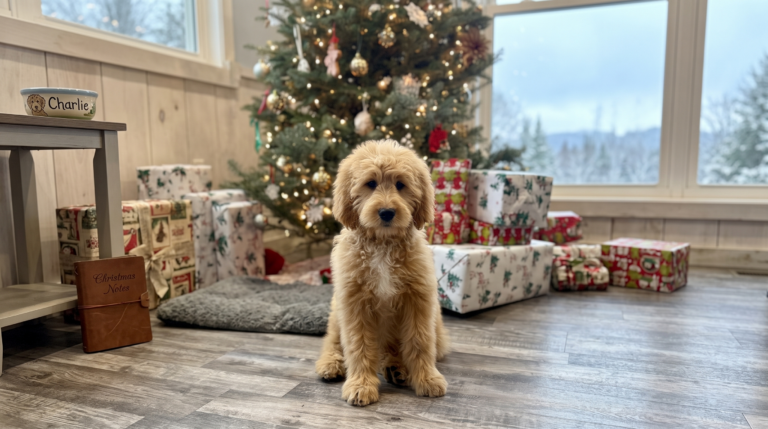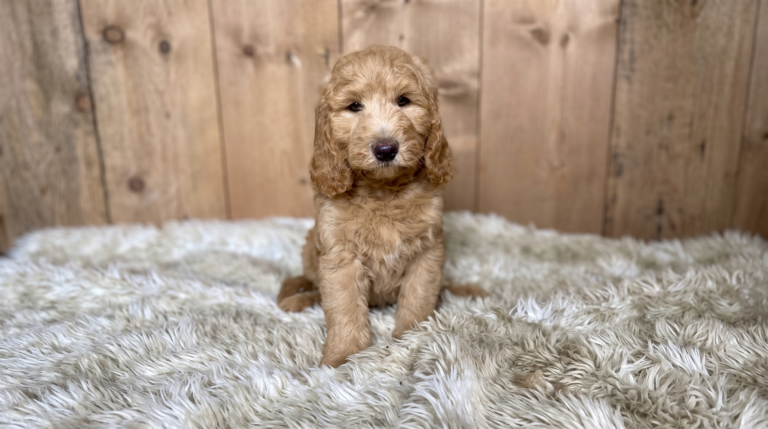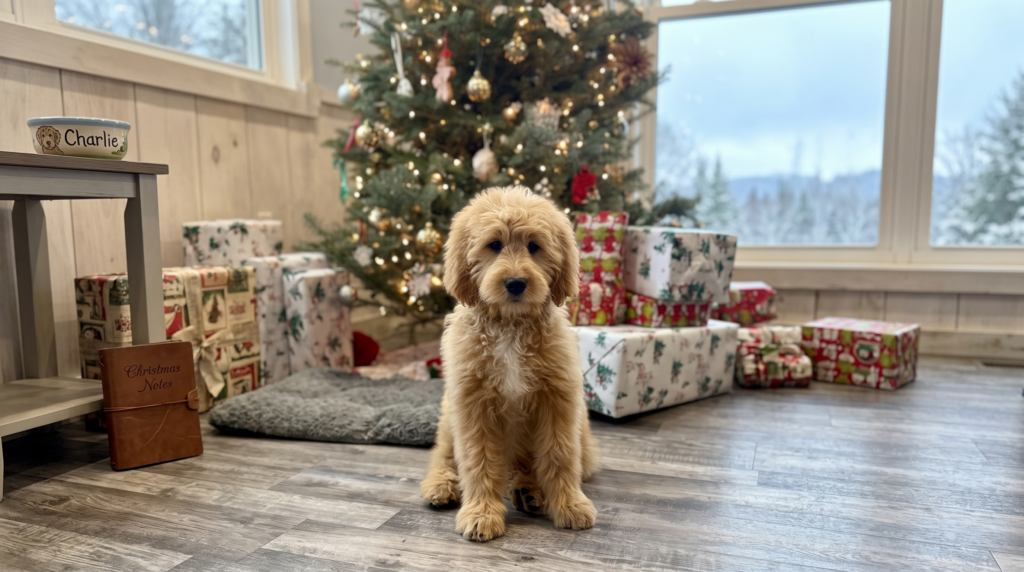
Choosing a Goldendoodle gets confusing the moment you start comparing sizes. Breeders use labels like toy, teacup, petite, micro, mini, moyen, medium, and standard, and very few of them explain what those words mean in pounds or inches. The toy Goldendoodle vs teacup question alone can leave families more unsure than when they started. Most people just want a simple answer to one question: how big do Goldendoodles get? We raise Mini and Standard Goldendoodles on our family farm in Columbia, Kentucky, and this guide breaks down the two sizes of Goldendoodle puppies we offer so you can pick the right fit for your home, your schedule, and your space.
Understanding the Sizes of Goldendoodle Puppies We Raise
We’ve been raising Golden Retrievers and Goldendoodles for over 10 years, and we keep our Goldendoodle program to two sizes: Mini and Standard. Each comes in F1 and F1B. That’s four options on our site.
Most adult Minis weigh somewhere from 15 to 35 pounds and stand 13 to 17 inches at the shoulder, which makes them easy to scoop up, easy to fit in a back seat, and still sturdy enough for a real walk. That’s the Mini Goldendoodle full grown size most registries use, and it’s what we suggest for smaller homes or leases with weight limits.
Mini and Standard cover most of the sizes of Goldendoodle families ask us about, even when other breeders slice them into four or five categories. Across breeders, Standard Goldendoodle size and weight can run anywhere from 50 to 90 pounds and 20 to 26 inches tall. Ours usually finish between 50 and 70 pounds, which puts them in the lower half of that range and right alongside a full grown Golden.
Comparing the Sizes of Goldendoodle Dogs by Weight and Height
Here’s the catch. Goldendoodles are a hybrid, and no kennel club sets an official size standard for them, so every breeder draws their own lines and one breeder’s Mini can turn out to be another’s Medium. The American Doodle Registry publishes the Goldendoodle weight chart most breeders use as a reference, and we use it too.
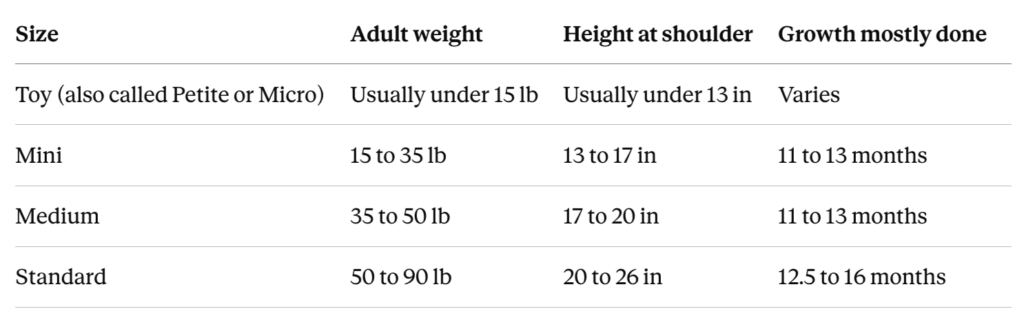
We don’t raise Toys or Mediums, but we include them so you can see where our dogs sit among all the sizes of Goldendoodle you’ll run into online. A Mini and a Standard can be nearly a foot apart at the shoulder, so one number for the whole breed doesn’t tell you much. Look at the average Goldendoodle height for the size you’re considering instead.
We hear from a lot of families hoping for something even smaller than a Mini. As for the toy Goldendoodle vs teacup question, there’s no official difference between the two. “Teacup” is a marketing word, not a registered size, and it usually describes a dog at the very bottom of the Toy range. Once a doodle drops under about 15 pounds, it’s usually mostly Poodle with very little Golden Retriever mixed in, which is worth knowing if the Golden side is what drew you to a Goldendoodle in the first place. If a listing promises a teacup, ask for both parents’ adult weights before anything else.
Looking at the Poodle Parent to Predict Size
The Golden Retriever side of a Goldendoodle is pretty predictable. Most adult Goldens weigh somewhere between 55 and 75 pounds, so that parent doesn’t swing the size much.
The Poodle side is where things change. Standard Poodle, Standard puppies. Swap in a Miniature Poodle and the litter comes out as Minis, usually with a bit of spread from one puppy to the next. An F1 Goldendoodle is a Golden Retriever crossed with a Poodle. An F1B goes one step further. It’s an F1 Goldendoodle bred back to a Poodle, so the puppies end up roughly 75 percent Poodle and usually carry a curlier coat to match.
Goldendoodle generations size differences are smaller than most people expect. Generation mostly changes the coat, and it’s the size of the Poodle in the family tree that has the biggest say in how big the puppy grows. If shedding worries you more, our rundown of Goldendoodle coat types covers that side of the decision. So when someone asks us how big do Goldendoodles get, our honest answer starts with a question of our own: which Poodle is the parent?
Asking Us About a Specific Litter
A chart gives you a range. A litter gives you a much better guess.
Before you pick a puppy, look at the parents. You can meet our dogs on our Our Dogs page and ask us about the pairing behind any litter you’re watching. Size estimates get a lot tighter when you know both parents. We’ve covered the other factors in our guide to what affects Goldendoodle size.
No breeder can promise an exact adult weight, and we’d be nervous about anyone who did. If you need a dog that stays under a certain number, plan around the top of the Mini Goldendoodle full grown size range and not the middle. A surprise five pounds is a lot less stressful when you’ve already made room for it.
Once your puppy is home, a Goldendoodle growth chart can help you check progress from month to month. Minis finish most of their growing around 11 to 13 months. Standards take longer and can keep filling out until they’re closer to 16 months old.
Picking From the Sizes of Goldendoodle on Our Farm
Daily life settles this faster than numbers do.
A Mini fits better in apartments, townhomes, and cars where every seat is already spoken for. If you’re renting, we’ve written about whether a small Goldendoodle can live in an apartment.
A Standard suits families with a yard, older kids, or someone who wants a real hiking partner. Standard Goldendoodle size and weight also means more food, a bigger crate, and a stronger pull on the leash, so be honest about who’ll be holding it. Plenty of our families have been happy with both sizes of Goldendoodle over the years, and neither one is the wrong choice.
If you’re stuck on generation too, don’t let it decide size for you. Goldendoodle generations size isn’t a big factor, so choose F1 or F1B based on coat and grooming. For a closer look at choosing between a Mini and a Standard, we’ve laid out exercise needs, lifespan, and space side by side.
Keep the Goldendoodle weight chart handy while you compare breeders, since every size is a range for a reason. Don’t get too hung up on the average Goldendoodle height quoted on a listing either, because your dog’s parents matter more than any breed average. Once your puppy is home and growing, a Goldendoodle growth chart will tell you far more than any label ever could, and it’s a lot more fun to track. When you’re ready to see the sizes of Goldendoodle we have right now, take a look at our Available Puppies page and tell us what size fits your family.