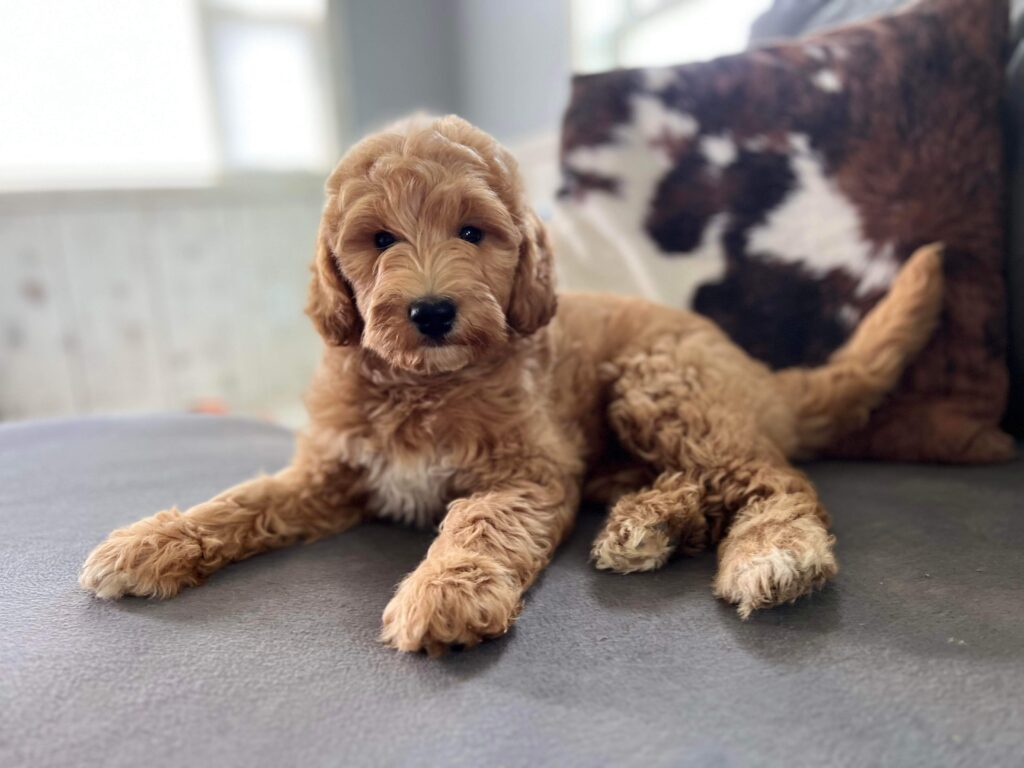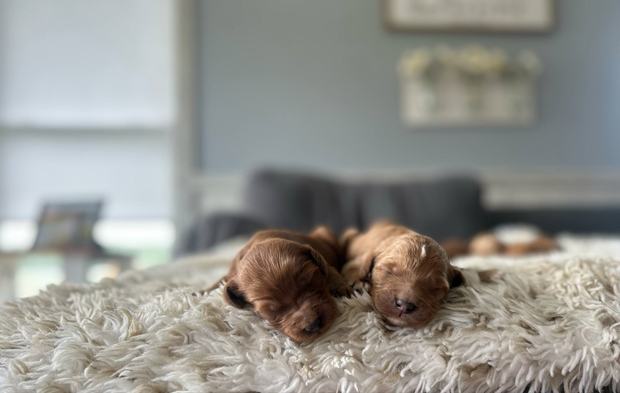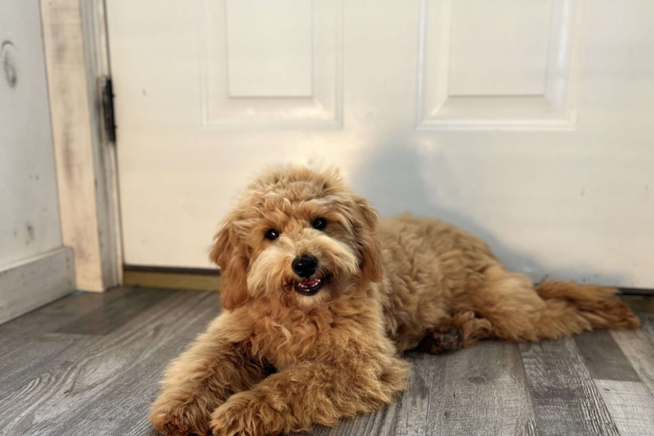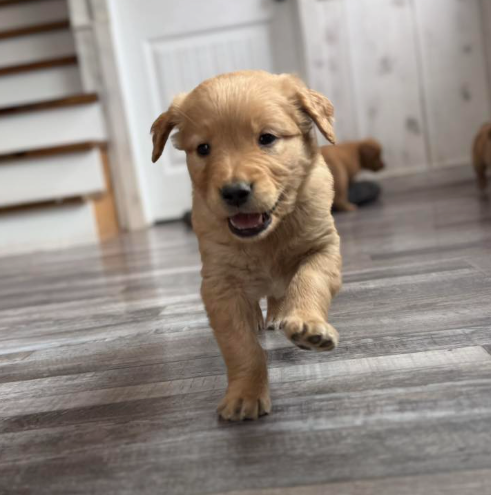
We hear this question all the time. Someone falls in love with a small Goldendoodle, pictures life with one, then starts second-guessing everything because they rent a one-bedroom in the city. The concern makes sense. You want to do right by the dog. But apartment living and small Goldendoodle ownership are more compatible than most people assume, and we want to give you an honest answer instead of a sales pitch.
The short answer is yes. The longer answer has more to do with your daily routine than your floor plan.
What Does “Small” Actually Mean in Goldendoodle World?
Before getting into apartment logistics, let’s sort out the size labels because they create genuine confusion. The terms mini Goldendoodle, micro Goldendoodle, and teacup Goldendoodle all describe dogs bred toward the smaller end of the Goldendoodle spectrum, but the actual weights and heights vary significantly by breeder and breeding program. “Small Goldendoodle” isn’t a standardized category with fixed measurements, and not every breeder uses these terms the same way.
A mini Goldendoodle typically weighs between 15 and 35 pounds as an adult. A micro Goldendoodle usually comes in under 15 pounds, sometimes as small as 8 or 10. “Teacup Goldendoodle” functions more as a marketing term than a defined category, so if a breeder uses it, ask specifically about the parent dogs’ sizes and the expected adult weight range for that particular small Goldendoodle line. Responsible breeders can answer that clearly without hesitation.
The miniature Goldendoodle size range is where most apartment dwellers tend to land, and it makes intuitive sense. A 20-pound dog adapts to smaller living situations in ways a 60-pound dog simply doesn’t. But the actual square footage of your apartment matters far less than most people think, and we’ll get into why.
Is Your Apartment the Problem, or Is Your Routine?
A small Goldendoodle is an active, intelligent dog. These are sporting breed crosses, and even in a compact body, they carry the energy and curiosity of that lineage. Golden Retrievers and Poodles were both working dogs bred for sustained activity. That history doesn’t disappear because the dog weighs 18 pounds instead of 60.
In practice, this means that apartment living with a Goldendoodle works, but it requires a real commitment to daily exercise. Two walks a day is a floor, not a ceiling. Most small Goldendoodles do best with 30 to 45 minutes of active movement per day. That could be a brisk neighborhood walk, off-leash time at a dog park, or a fetch session in a long hallway. The point is consistency. Goldendoodle puppies, perfect for active lifestyles, aren’t just a phrase we throw around; they reflect something true about how these dogs are built and what they need to stay balanced.
Mental stimulation matters just as much as physical exercise, and in some cases more. Puzzle feeders, short training sessions, and nose-work games tire out a dog’s brain in ways a walk around the block doesn’t always cover. A mentally satisfied dog is a calm, settled dog, and that holds true whether they’re living in a studio apartment or on a property with a fenced yard. Don’t underestimate the impact of a 10-minute training session in your living room on a Goldendoodle’s overall mood and behavior.
What Makes Goldendoodle Temperament Unusually Good for City Living?
Goldendoodle temperament is one of the genuine reasons this breed adapts so well to apartment and city environments. These dogs are people-oriented, emotionally attentive, and not prone to territorial barking. That last point matters enormously when your neighbors are 12 inches away, on the other side of a wall. Goldendoodles tend to read their owners’ energy and settle into household routines without much drama.
The F1B mini Goldendoodle in particular comes up regularly when we talk with city-based clients. An F1B is 75% Poodle and 25% Golden Retriever, a backcross that tends to produce a lower-shedding coat and a temperament that leans slightly calmer and more focused than a standard F1. For someone in a compact space where shedding or dog allergies are real daily concerns, asking specifically about the F1B mini Goldendoodle is worth doing before you commit.
Individual personality still varies even within a generation, and responsible small Goldendoodle breeders will be upfront about that. A good breeder watches their litters from the first weeks and can tell you which puppies are bolder, which are more calm-natured, and which might be the better fit for someone living in a busy apartment building. If a breeder can’t speak to individual puppy personalities, that’s information worth factoring in.
Before the Puppy Arrives: What Do You Actually Need?
Goldendoodle puppy care in a compact space is completely manageable with deliberate preparation. The most important tool you have in an apartment is a crate. Crate training an F1b Mini Goldendoodle follows the same basic principles as with any puppy: start early, keep it positive, and give them time to associate the crate with safety rather than confinement. A crate gives your puppy a defined, safe space in a home without a backyard to decompress in, and it prevents the destructive behavior that tends to surface when young dogs are left unsupervised in open spaces. Start on day one and don’t rush it. Done right, your puppy will seek out the crate on their own.
Establish a consistent bathroom schedule from the beginning. Apartment dogs need scheduled outdoor trips more urgently than dogs with yard access, because there’s no door to run out to when a puppy can’t hold it. Most puppies need to go out every two to three hours during the day, and that frequency doesn’t taper off for the first several weeks. Building that schedule into your routine early prevents a lot of frustration on both sides. Our guide for your first week bringing home a Golden Retriever puppy covers many of the same fundamentals: routine-building, managing night schedules, and getting through those first overwhelming days. Most of it applies directly to Goldendoodle puppies as well.
Why Small Goldendoodles Handle Apartment Life Better Than You’d Think
Why small Goldendoodles make the perfect family dog often explains why they work in apartments, too: they’re affectionate, deeply bonded to their people, and they don’t need much square footage to feel secure. What they need is engagement and consistency from an owner who took the setup seriously from the beginning.
We’ve placed small Goldendoodles with clients in high-rise buildings, one-bedroom apartments, and every configuration in between. The dogs that settle in well share one thing: owners who built the routine early and maintained it. If you’re weighing whether a small Goldendoodle realistically fits your apartment life, we’re happy to walk through it with you.